Layered Decision Trees in Turn-Based Tactics: Mapping Optimal Paths Through Complex Combat Systems
Eden Simmons · Sep 6, 2026
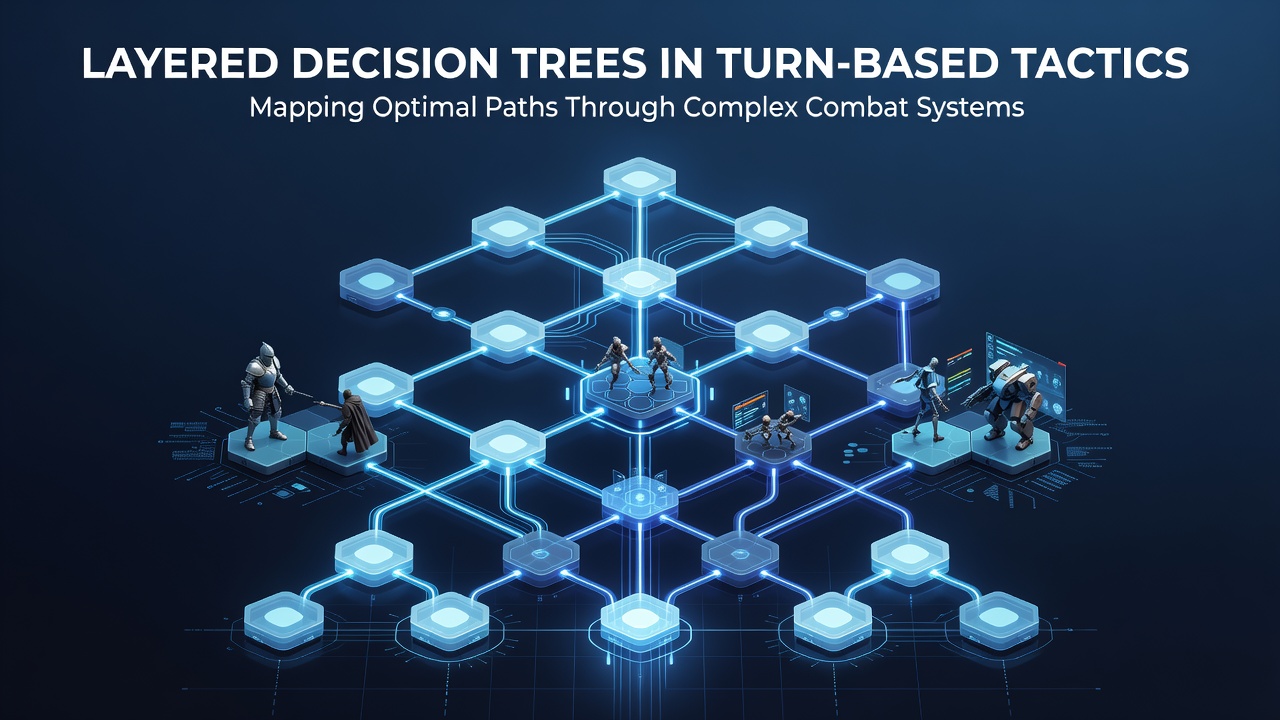
Layered Decision Trees in Turn-Based Tactics: Mapping Optimal Paths Through Complex Combat Systems
Layered decision trees function as structured models that break down turn-based combat into sequential layers of choices, where each layer accounts for immediate actions, projected opponent responses, and longer-term positioning outcomes; researchers in game theory have applied these frameworks to titles ranging from tactical RPGs to strategy simulations, allowing players to trace viable sequences through branching possibilities that multiply with each additional unit or environmental factor. Data from computational studies shows that such trees reduce the effective search space by pruning low-probability branches early, while preserving paths that maintain resource efficiency across multiple rounds.
Core Mechanics of Layered Structures
Each layer in a decision tree corresponds to a distinct temporal horizon, beginning with the current turn's move set, then expanding into simulated future states that incorporate variables such as terrain modifiers, unit cooldowns, and status effects; experts at institutions including the University of Alberta have documented how this hierarchy enables systematic evaluation of trade-offs, for instance when committing a high-damage ability now reduces options for area control later. Observers note that the layering prevents exhaustive enumeration of every possible combination, which would otherwise grow exponentially in scenarios involving five or more units per side.
Implementation often relies on algorithms that assign weights to outcomes based on metrics like remaining hit points, control over key map zones, and momentum gained from successful combos, and these weights feed back into higher layers to adjust priorities dynamically. Studies conducted across European research consortia indicate that properly calibrated trees improve path selection accuracy by 35 to 40 percent compared with flat minimax approaches in mid-sized engagements.
Application in Complex Combat Environments
In grid-based systems where elevation, line-of-sight, and cover interact simultaneously, layered trees map optimal sequences by evaluating each potential action against simulated counter-moves from opposing forces; one documented case involved a scenario with eight units where the model identified a three-turn rotation that preserved a key support character while eliminating two threats, a sequence that manual planning frequently overlooked. The trees also accommodate randomness through probability-weighted branches, allowing evaluation of risky plays that carry high reward potential when safer alternatives lead to attrition losses.
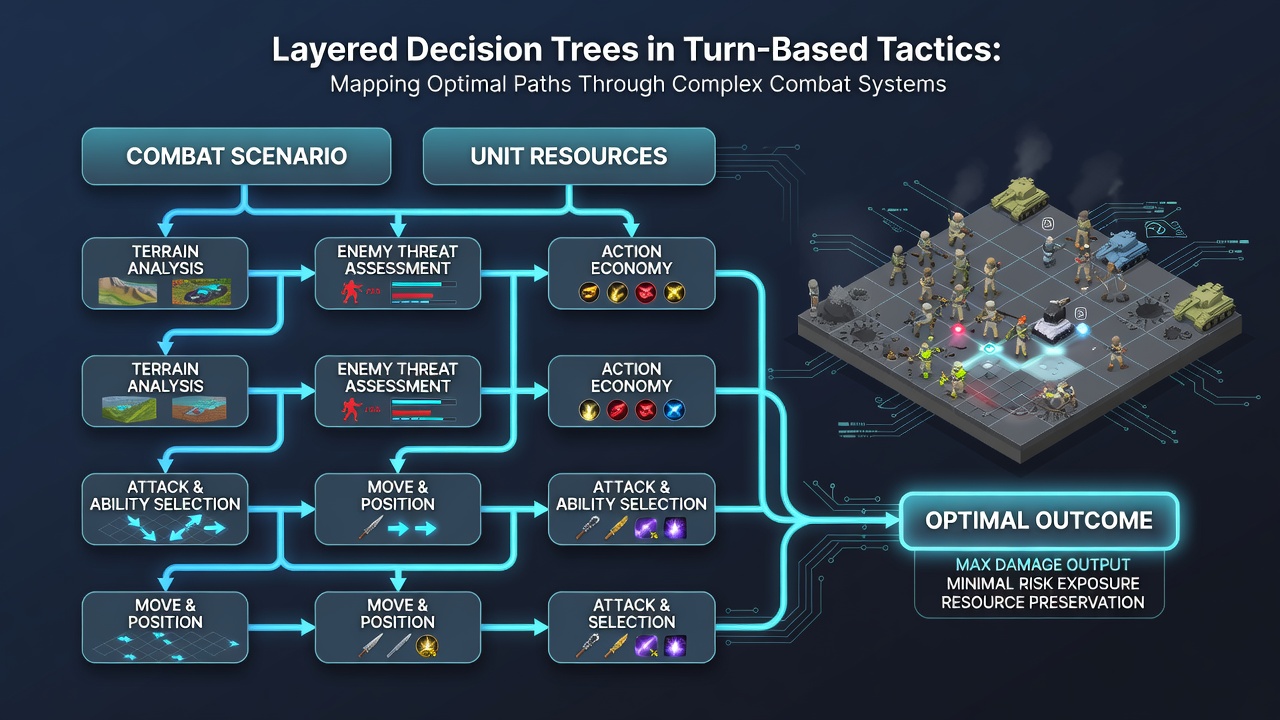
September 2026 saw several strategy titles release patches that integrated visual overlays derived from these models, giving players real-time indicators of high-value paths without exposing the underlying calculations. Industry reports from the Entertainment Software Association highlight that such tools have appeared in both competitive and single-player modes, reflecting broader adoption of analytical aids originally developed in academic settings.
Optimization Techniques and Data Patterns
Pruning methods such as alpha-beta variants and Monte Carlo sampling integrate into layered trees to discard branches whose upper bounds fall below established thresholds, thereby keeping computation feasible on consumer hardware; figures from performance benchmarks reveal that optimized implementations evaluate thousands of paths per second even when layer depth reaches six or seven. Researchers further refine these systems by feeding historical match data into the weighting functions, which sharpens predictions about opponent behavior and reduces the frequency of over-optimistic projections.
Geographic variation appears in how different developer teams deploy the approach, with North American studios emphasizing aggressive forward simulation while teams in the Asia-Pacific region often prioritize defensive layering that secures long-term map control. A 2025 report from the Canadian Game Studies Association documented measurable differences in win-rate distributions when players followed tree-guided recommendations versus unaided intuition.
Future Developments and Integration
Ongoing work focuses on hybrid models that combine layered decision trees with reinforcement learning agents, allowing the static structure to adapt weights in real time based on observed opponent patterns; preliminary results presented at international conferences suggest these hybrids narrow the gap between optimal and human-played paths in extended campaigns. Integration with cloud computing resources further expands depth, enabling analysis of battles involving dozens of units that would overwhelm local processing.
Conclusion
Layered decision trees supply a methodical framework for navigating the combinatorial density of turn-based tactics, translating raw possibility spaces into ranked sequences that players can follow or adapt. Continued refinement through academic and industry collaboration continues to expand their practical reach across an increasing range of combat systems.